The 2026 Employee Evaluation: Continuous, Fair, and AI-Powered
Employee Evaluation

What if 95% of managers are using a performance review process that actually demotivates their team? For decades, the traditional employee evaluation has been a source of dread and inefficiency. This rigid, once-a-year ritual is a broken system that fails our modern, dynamic workplaces.
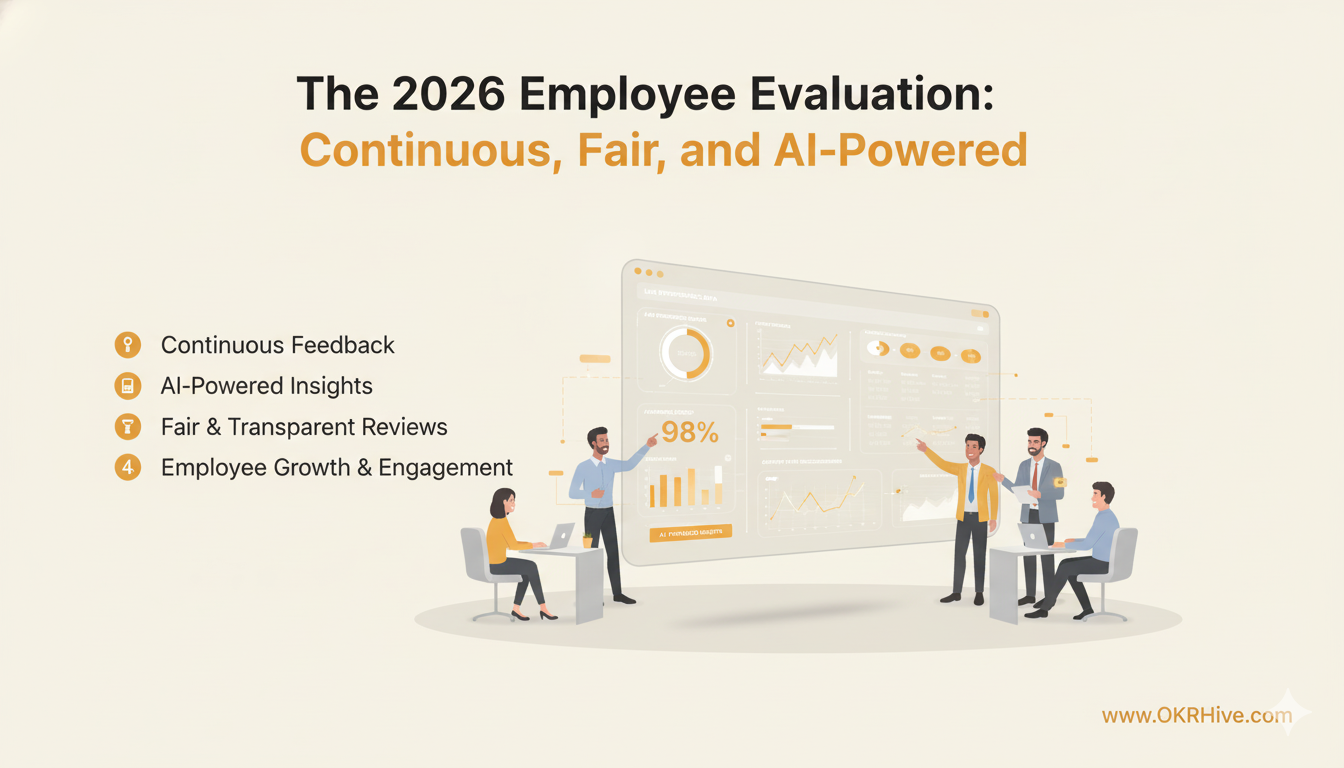
The 2026 Employee Evaluation: Continuous, Fair, and AI-Powered
But a revolution is underway. Leading companies are transforming this outdated practice into a powerful engine for growth and connection.
This isn't about bureaucratic box-ticking. It's about building a culture where people feel genuinely seen, heard, and empowered to do their best work.
This guide is your playbook for change. We will dismantle the old approach and explore a new vision for continuous performance feedback.
You will discover modern tools and practical techniques that make the entire performance management process easier and dramatically more effective. Let's build a system your team will not just tolerate—but truly value.
Why the Old Way of Evaluating Performance is Failing You
The traditional annual review is outdated. Research shows it can do more harm than good. It often focuses on past mistakes, not future growth. This creates anxiety and fails to address current needs.
Think about these common problems:
The Recency Effect: Managers rate performance based on the last few months, forgetting the whole year.
No Real-Time Data: Feedback comes too late to change behavior.
One-Way Street: The employee listens; the manager talks. There's no true conversation.
Generic Feedback: Phrases like "needs improvement" don't help anyone improve.
This rigid employee performance appraisal system doesn't fit the way we work now, especially with remote and hybrid teams. We need a more fluid, human-centered approach.
The New Blueprint: Shifting from Annual Appraisal to Continuous Conversation
The future of performance management is continuous. It’s a cycle, not an event. This shift is the most important change you can make.
Instead of one big, scary meeting, you create an ongoing dialogue. This means regular check-ins, timely feedback, and collaborative goal-setting. The focus moves from judging the past to coaching for the future.
This approach builds trust. Employees know where they stand. They get the guidance they need to succeed right now, not in six months. This is the heart of continuous performance feedback. It transforms the manager's role from judge to coach and partner.
Building Your Foundation: Effective Employee Evaluation Criteria
What should you actually talk about in these continuous conversations? Clear, fair criteria are essential. Without them, feedback feels arbitrary and unfair.
Forget a simple 1-5 rating scale. Modern employee evaluation criteria are multi-dimensional. They should be tailored to the role and the company's goals.
Here are key areas to consider:
Goal Achievement: Did they meet their objectives? Use the SMART goal framework.
Core Competencies: Skills like communication, problem-solving, and teamwork.
Job-Specific Skills: The technical abilities required for the role.
Cultural Contribution: How they live the company's values.
Innovation & Initiative: Did they suggest new ideas or improve processes?
For remote teams, add criteria like communication clarity in digital channels, self-motivation, and proactive collaboration. Using consistent criteria makes every conversation more objective and productive.
The Power of Self-Reflection: Your Employee Self-Evaluation Guide
One of the most powerful tools in a modern employee evaluation is self-reflection. When employees assess their own work, they become active participants in their growth.
A great employee self-evaluation guide empowers your team to think critically about their performance. It prepares them for a more balanced and meaningful discussion with their manager.
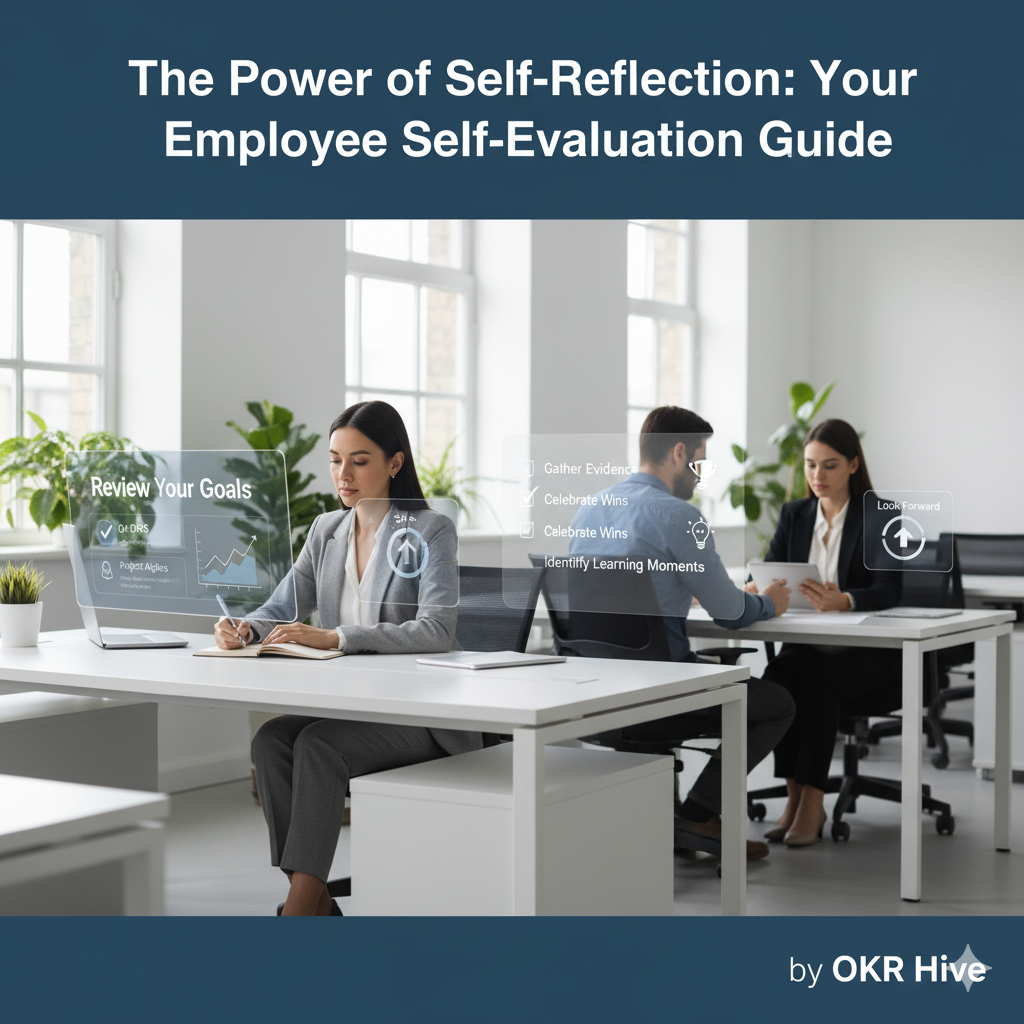
Step-by-Step Employee Self-Evaluation Guide for 2026:
Review Your Goals: Start by looking at the goals you set. What did you accomplish?
Gather Evidence: Collect data, positive feedback emails, and completed project links.
Celebrate Wins: Don't be shy. List your biggest achievements and their impact.
Identify Learning Moments: What challenges did you face? What did you learn from them?
Look Forward: What skills do you want to develop? What are your goals for the next period?
Providing a simple template or a performance management platform that supports self-assessment makes this process easy and consistent for everyone.
Leveraging Technology: Finding the Best Employee Evaluation Software
Doing all this manually is hard. This is where technology becomes your best friend. The right performance management platform automates the busywork and unlocks deeper insights.
The market for a modern employee performance appraisal system is vast. Look for the best employee evaluation software that supports a continuous feedback model, not just annual reviews. The goal is to find a modern performance management system that fits your workflow.
Key features to look for:
Easy Check-in Scheduling: For regular one-on-one meetings.
360-Degree Feedback: Gathers input from peers and other colleagues.
Goal Tracking: Allows you to set and monitor objectives in real-time.
Integration: Works with tools like Slack, Microsoft Teams, or your HR system.
Many of the best software for continuous employee performance tracking now use smart technology. This leads us to the most exciting trend.
The AI Revolution: How AI is Transforming Employee Evaluation Processes
Artificial Intelligence is quietly reshaping performance management. AI-powered performance management tools are moving beyond simple tracking to providing actionable insights.
This is not about robots managing people. It's about using data to support human decisions.
How AI is transforming employee evaluation processes:
Neutralizing Bias: AI can analyze language in feedback to flag potentially biased comments.
Identifying Trends: It can spot patterns in AI-driven employee performance analytics, like a team's skill gaps.
Personalized Suggestions: The system can recommend learning resources based on an employee's goals.
Predictive Insights: It can help forecast future performance risks or potential.
These modern employee performance appraisal systems using AI give managers a clearer, data-backed picture. This allows for more fair and effective development conversations.
Making it Real: A Framework for the Evaluation Conversation
The conversation itself is where everything comes together. This is your moment to connect, motivate, and align. A good structure reduces anxiety for both of you.
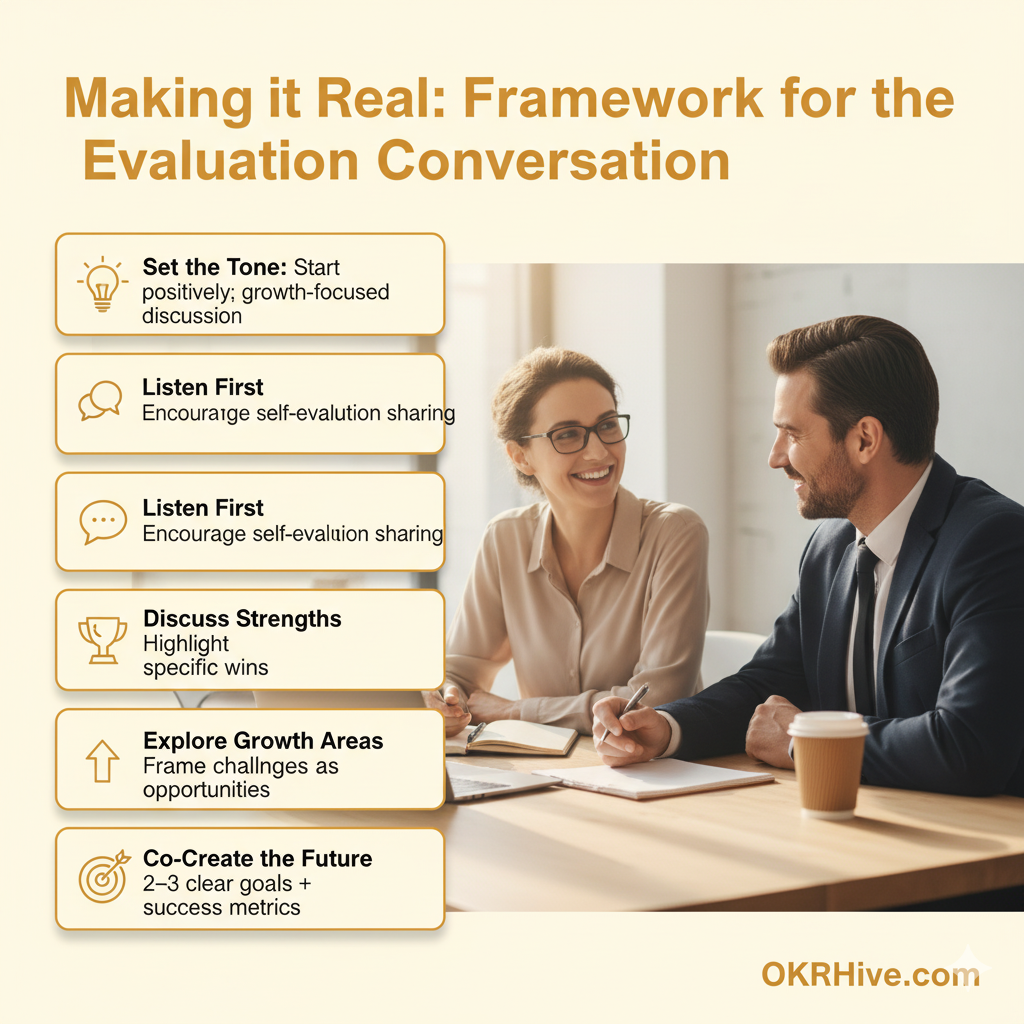
A Framework for the Evaluation Conversation
The Conversation Framework:
Set the Tone: Start positively. Reiterate that this is a collaborative discussion for their growth.
Listen First: Ask them to walk you through their self-evaluation. Listen more than you talk.
Discuss Strengths: Be specific about what they do well. Use your collected examples.
Explore Growth Areas: Frame challenges as opportunities. Ask, "How can I support you here?"
Co-Create the Future: Set 2-3 clear goals for the next period together. Define what success looks like.
This framework turns a monologue into a dialogue. It ensures the employee leaves feeling valued and clear on their path forward.
The Future is Now: Trends in Employee Performance Evaluation
The evolution of employee evaluation is not slowing down. The workplace is changing too quickly. Staying ahead means understanding what's next.
Future trends in employee performance evaluation include:
Focus on Well-being: Metrics will include work-life balance and mental health.
Project-Based Reviews: Feedback will happen at the end of key projects, not on a fixed calendar.
Skills & Capabilities: The focus will shift from the job title to the portfolio of skills an employee has and can develop.
Even More Personalization: Modern appraisal techniques will be tailored to individual learning and working styles.
By embracing these ideas, you future-proof your management style and build a team that is resilient, adaptable, and engaged.
Your Next Step: Building a Culture of Growth
A modern performance management framework is a cornerstone of a high-performing culture. It shows your team that you are invested in their success. It builds trust, clarity, and a shared commitment to excellence.
This isn't a one-time project. It's a cultural shift. Start small. Introduce regular check-ins. Experiment with a new performance management platform. Encourage self-reflection.
The goal is to create an environment where feedback is not feared but welcomed as a gift. Where a performance review is just a formal part of the ongoing conversation you're already having. That is how you build a team that thrives.
Frequently Asked Questions (FAQs)
How often should we conduct formal employee evaluations?
While continuous feedback is key, a semi-annual formal review is a good practice. This provides a structured time to summarize progress, adjust long-term goals, and discuss career development, complementing your regular check-ins.
What's the biggest mistake managers make during evaluation meetings?
The biggest mistake is talking too much and not listening enough. The meeting should be a 50/50 dialogue. The manager's role is to facilitate, guide, and listen to the employee's perspective to create a shared understanding.
How can I make evaluations fair for remote employees?
Document everything. Use project management tools to track contributions. Make a conscious effort to notice quiet contributions in digital channels. Include criteria specific to remote work, like proactive communication and effective use of collaboration tools.
What should I do if an employee completely disagrees with my evaluation?
Don't get into an argument. Pause and listen to their reasons. Ask for specific examples from their viewpoint. If there's a stalemate, agree to gather more data (e.g., 360 feedback) and revisit the discussion in a week. The goal is alignment, not winning.
Are there free online tools to help with this process?
Yes, many platforms offer free tiers for small teams. Tools like Trello or Asana can be adapted for goal tracking. For more dedicated features, look into the free versions of platforms like Lattice or 15Five, which are designed for continuous performance management.


