
A staggering 90% of companies fail to execute their strategy.
They treat the OKR framework as a simple checklist. Teams learn OKR goal setting. They track key results. But the soul is missing. Work stays in silos. This lack of organizational alignment is a common story.
The critical missing piece is a genuine OKR culture.
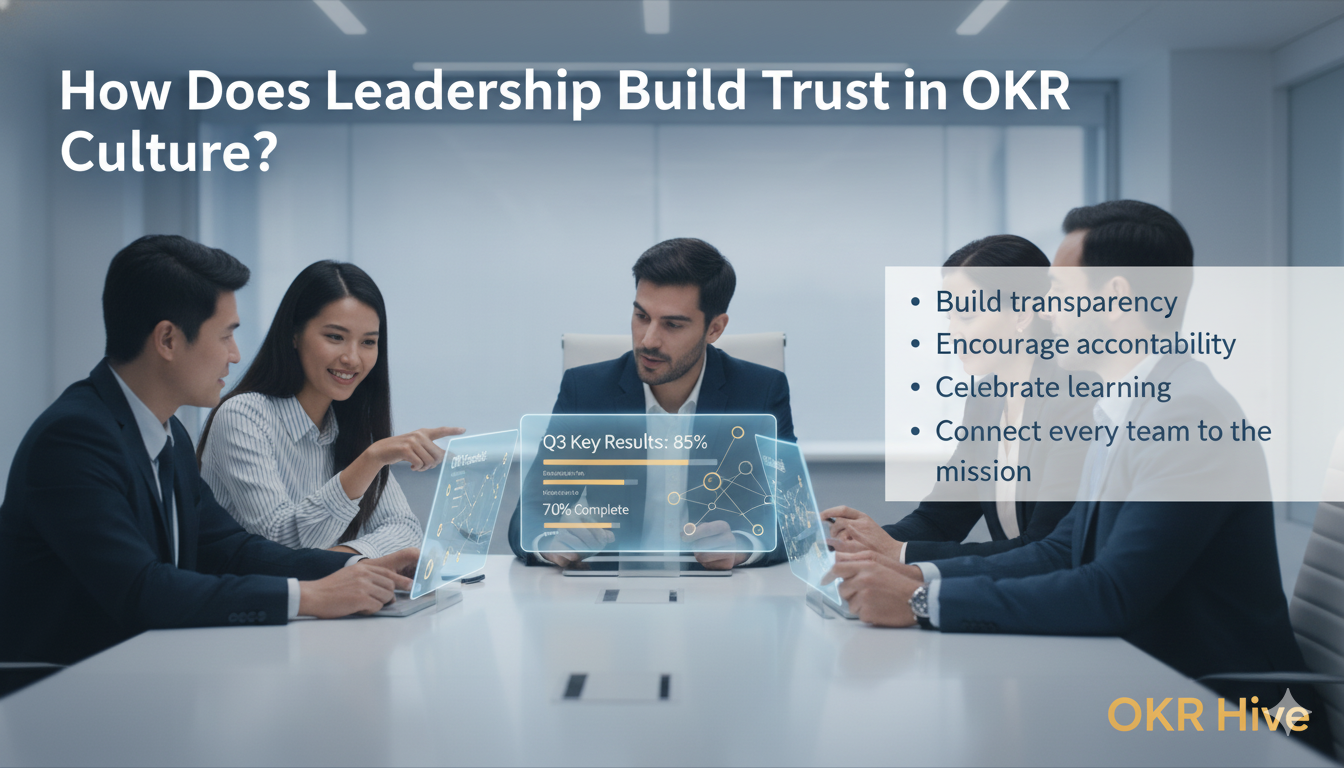
How Does Leadership Build Trust in an OKR Culture?
This is the environment where goals become a shared mission. It turns a basic OKR implementation into a powerful engine for your OKR strategy. It’s what separates performative exercises from true progress.
This guide provides the blueprint for this shift. We will move beyond simple OKR management. You will discover the OKR best practices that drive real OKR adoption.
Let's build a focused and resilient organization. One where every team member is connected to what matters most.
What is an OKR Framework, Really?
Think of your organization as a ship sailing toward success. Your navigation system provides the direction and tracks your progress.
But instruments alone don't complete the journey. You need the wind in your sails and a crew working in perfect harmony. This vital energy represents a true OKR culture.
This environment creates powerful organizational alignment. Every team member understands how their specific role advances the entire mission.
This approach drives genuine OKR engagement. People see their direct impact daily. Goals transform from assigned tasks into shared missions that matter.
The difference appears in your OKR implementation. Are you just installing another software tool? Or are you building a mindset where goals connect to deeper purpose?
This strategic shift turns your OKR strategy from theoretical planning into living practice. It's what makes ambitious goals not just possible, but achievable.
The Leadership Blueprint: Strengthening Your Goal Framework
True organizational transformation begins with leadership commitment to the OKR culture. Successful executives understand this requires fundamental behavioral changes.
Establish Radical Transparency
Leaders must openly share company objectives and personal team goals. When executives reveal their progress and challenges, it creates psychological safety for everyone.
This transparency builds crucial trust across all levels. It transforms your OKR tracking from a performance judgment into collaborative problem-solving.
Model Learning-Oriented Behaviors
The best leaders celebrate ambitious attempts, not just perfect outcomes. They focus on insights gained rather than targets missed.
This approach forms the foundation of successful OKR adoption. Teams feel empowered to pursue stretch goals without fear of failure.
Connect Strategy to Purpose
People engage deeply when they understand the "why." Effective leaders consistently link company objectives to meaningful customer impact and organizational mission.
This transforms your OKR implementation from mechanical goal-setting into an inspiring shared journey that drives exceptional results.
Best Strategies to Align Teams with OKR Culture
Organizational alignment is the holy grail. It’s what separates high-performing companies from the rest. Here’s how to achieve it with your Team OKRs.
Start with the Company North Star.
Every OKR implementation should begin at the very top. The leadership team must first define and communicate 3-5 company-level Objectives for the quarter.
These become the North Star for the entire organization.
Cascade with Context, Not Just Command.
The next step is for departments to create their own OKRs. The key is that their objectives should directly support the company's North Star.
This isn't about copying and pasting. It's about asking, "What can my team do to directly impact this company goal?"
This process creates a golden thread of OKR alignment culture, connecting the work of the IT team in Lisbon to the sales team in Sydney.
Host OKR Draft Sessions.
Make alignment collaborative. Bring teams together to "draft" their OKRs. They present their proposed goals and show how they connect upward.
This fosters discussion, eliminates redundant work, and sparks ideas for cross-functional collaboration. It’s a powerful practice for OKR management.
Sustaining Your OKR Framework for Long-Term Impact
A successful OKR implementation delivers value quarter after quarter. It demands consistent commitment, not just initial enthusiasm. Building lasting impact requires three key practices.
Establish Regular Check-In Rhythms
Weekly progress reviews form the heartbeat of your OKR management. Keep these meetings short and focused. Teams should report progress, identify blockers, and adjust course quickly.
This consistent OKR tracking prevents goals from being "set and forgotten." It keeps priorities visible and drives accountability throughout the organization.
Recognize Progress and Learning
Celebrate teams making strong headway on their objectives. More importantly, acknowledge "intelligent failures" where teams aimed high and learned valuable lessons.
This approach strengthens OKR adoption by making psychological safety tangible. It shows that learning and effort matter as much as perfect outcomes.
Maintain Focus on Measurable Outcomes
Distinguish between activities and results. Instead of "conduct customer research," measure "identify three validated product improvements from customer feedback."
This fundamental principle of effective OKR goal setting empowers teams to determine their approach while keeping everyone focused on the results that truly move the needle.
How OKR Software Supports Employee Engagement and Performance
You can manage OKRs with spreadsheets and slides. But for a growing organization, this becomes a bottleneck to the very culture you're trying to build.
Modern OKR software is not just a tracking tool. It's a culture-building platform.
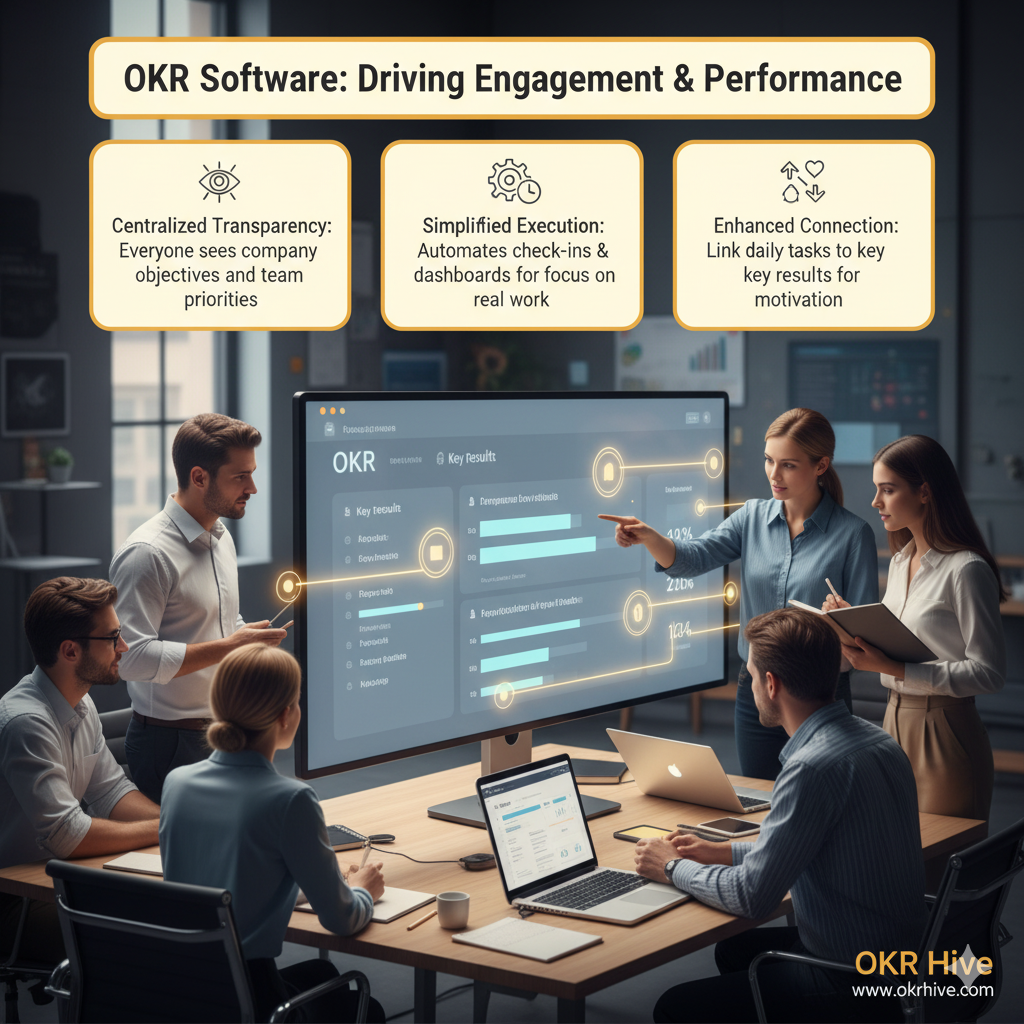
OKR Software Supports Employee Engagement and Performance
Centralized Transparency
A strong platform creates a single source of truth. Everyone sees company objectives and team priorities clearly.This visibility breaks down departmental barriers. It builds the shared focus that defines a strong OKR culture.
Simplifies Execution
Technology automates administrative heavy lifting. It streamlines goal alignment and progress tracking.The system manages check-in reminders and dashboard updates. This efficiency lets teams concentrate on meaningful work.
By reducing the administrative burden, it allows teams to focus on what matters: the work itself.
Enhances Connection.
Many platforms allow employees to link their daily work (like tasks from Jira or Asana) directly to Key Results. This closes the loop, showing each individual how their direct effort contributes to the bigger picture.
This is a powerful motivator and a key to improving OKR adoption.
Steps to Improve OKR Adoption and Team Alignment
Rolling out OKRs can feel daunting. Follow these OKR best practices to ensure a smooth and successful adoption.
Start with a Pilot Group. Don't force the entire company onto OKRs at once. Choose one or two motivated teams to pilot the OKR framework. Let them work out the kinks and become internal champions.
Invest in Training. OKR adoption requires a mindset shift. Host workshops that explain the "why" and the "how." Use real-world OKR culture examples from your pilot teams to make it relatable.
Assign Coaches. Identify passionate employees in each department who can act as OKR coaches. They can answer questions and help their peers craft better goals.
Keep it Simple First. In the beginning, encourage teams to have just one Objective with 2-3 Key Results. An overly complex start can lead to frustration and resistance.
Gather Feedback and Iterate. After the first quarter, survey the company. What worked? What was confusing? Use this feedback to refine your process for the next cycle. This shows you value their input.
OKR Framework in Action: Lessons from Top Companies
Let's examine how leading organizations implement goal management. Their approaches offer valuable insights for any OKR implementation.
Google: Mastering Stretch Goals
Google's famous OKR framework distinguishes between committed and aspirational goals. This creates clear expectations while encouraging innovation.
Teams pursue moonshots without fear of failure. The focus remains on ambitious progress rather than perfect scores. This approach has fueled their legendary innovation pipeline.
Amazon: Driving Ownership and Alignment
Amazon's OKR strategy revolves around customer obsession and team ownership. Each group operates like an independent startup within the larger organization.
Their OKR goal setting focuses on customer-facing outcomes. An objective like "Simplify the returns process" directly connects to measurable customer behaviors. This creates powerful organizational alignment around shared principles.
Both examples demonstrate that successful OKR adoption adapts to company values while maintaining core principles. The right OKR management approach reflects your unique culture and strategic priorities.
Your Future-Ready OKR Strategy for Modern Organizations
The world of work is changing. Hybrid models, distributed teams, and rapid market shifts are the new normal. Your OKR strategy must be built for this reality.
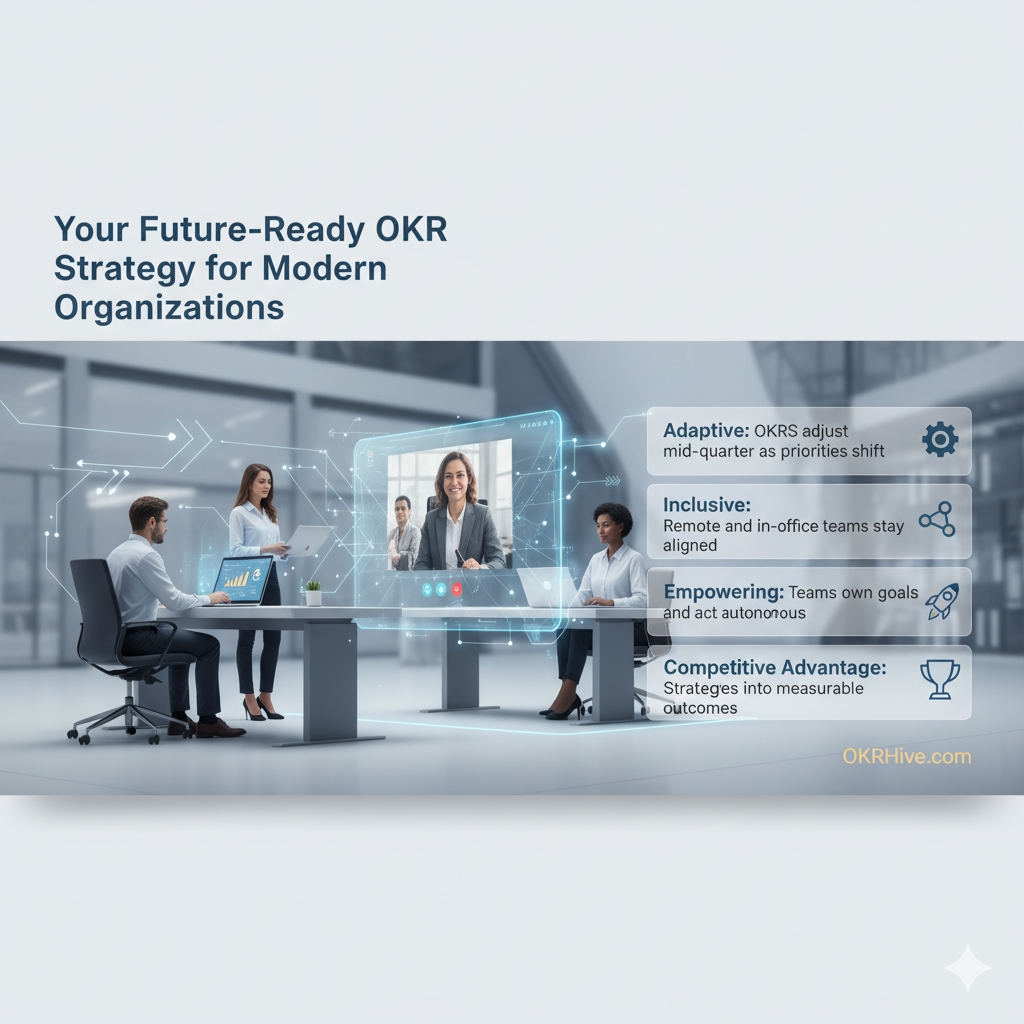
Future-Ready OKR Strategy for Modern Organizations
A future-ready OKR culture is:
Adaptive: OKRs can be adjusted mid-quarter if new information emerges.
Inclusive: It leverages OKR software to keep remote and in-office teams equally connected and aligned.
Empowering: It gives autonomous teams the context they need to set their own goals, ensuring agility without losing strategic cohesion.
Building this is your ultimate competitive advantage.
Conclusion: It's a Journey, Not a Destination
Building a vibrant OKR culture doesn't happen in one quarter. It's a continuous journey of learning, adapting, and improving.
It requires commitment from leadership, buy-in from teams, and the right processes to support it. But the payoff is immense.
You will create an organization that is focused, aligned, and resilient. An organization where every employee understands how their work contributes to the bigger picture.
Start today. Choose one step from this guide and act on it. Your future-ready organization is waiting to be built.
Frequently Asked Questions (FAQs)
How do we get leadership buy-in?
Focus on business value. Propose a pilot program to demonstrate tangible results in team alignment and strategic focus, showcasing the power of an OKR culture.
Is dedicated software necessary?
Spreadsheets work initially but limit growth. Purpose-built platforms are designed for transparency and easy tracking, scaling seamlessly with your organization.
What's the ideal number of OKRs?
Less is more. We recommend 3-5 Objectives per team, each with 2-4 Key Results. This forces sharp prioritization and prevents team overload.
What is the biggest implementation mistake?
Linking OKRs directly to performance reviews. This encourages sandbagging and kills the ambition and innovation that stretch goals are meant to foster.
How do we handle resistant teams?
Resistance often stems from fear. Provide extra coaching and connect goals to problems they want to solve. Showcasing early wins from pilot teams builds crucial belief.


