Goals Failing? Fix Them With OKR Management Software Now
OKR Management Software

You set ambitious goals. You announce them with enthusiasm. Yet, research shows a staggering 83% of business strategies fail due to poor execution, not the strategy itself. Teams are busy, but are they driving real, measurable impact? This execution gap is where ambitious plans go to die.
The solution isn't to work harder. It's to work smarter with a system that creates absolute clarity and alignment. This is where effective OKR management software becomes your most crucial advantage.
Goals Failing? Fix Them With OKR Management Software Now
Forget clunky spreadsheets. Modern OKR software transforms your Objectives and Key Results from a static document into a dynamic engine for growth. It creates a central hub where progress is visible, and every employee sees how their work moves the needle.
This guide will show you how a dedicated OKR platform does more than track goals—it transforms your operational culture. We will explore how it works, why it's essential, and how to choose the best OKR performance tracking tool for your team's success.
Beyond Spreadsheets: Unlocking True Strategic Alignment
Many organizations rely on spreadsheets for their OKR process. This approach creates immediate roadblocks. Data becomes siloed and updates are frustratingly manual.
Your teams lose a clear line of sight to top-level ambitions. This lack of connection undermines motivation and strategic focus.
A dedicated OKR management software solution directly addresses these challenges. It replaces chaotic documents with a unified OKR platform for everyone.
This centralization provides real-time visibility. Progress is no longer a mystery. Everyone sees how their contributions drive the company forward.
This is the core function of effective goal management software. It turns abstract goals into a tangible, shared action plan.
The result is a powerful, aligned organization. You move from simply tracking goals to actively achieving them.
How Modern OKR Platforms Unlock Your Team's Full Potential
A dedicated tool transforms the OKR framework. It turns theory into daily practice.
This shift is what separates high-performing teams from the rest.
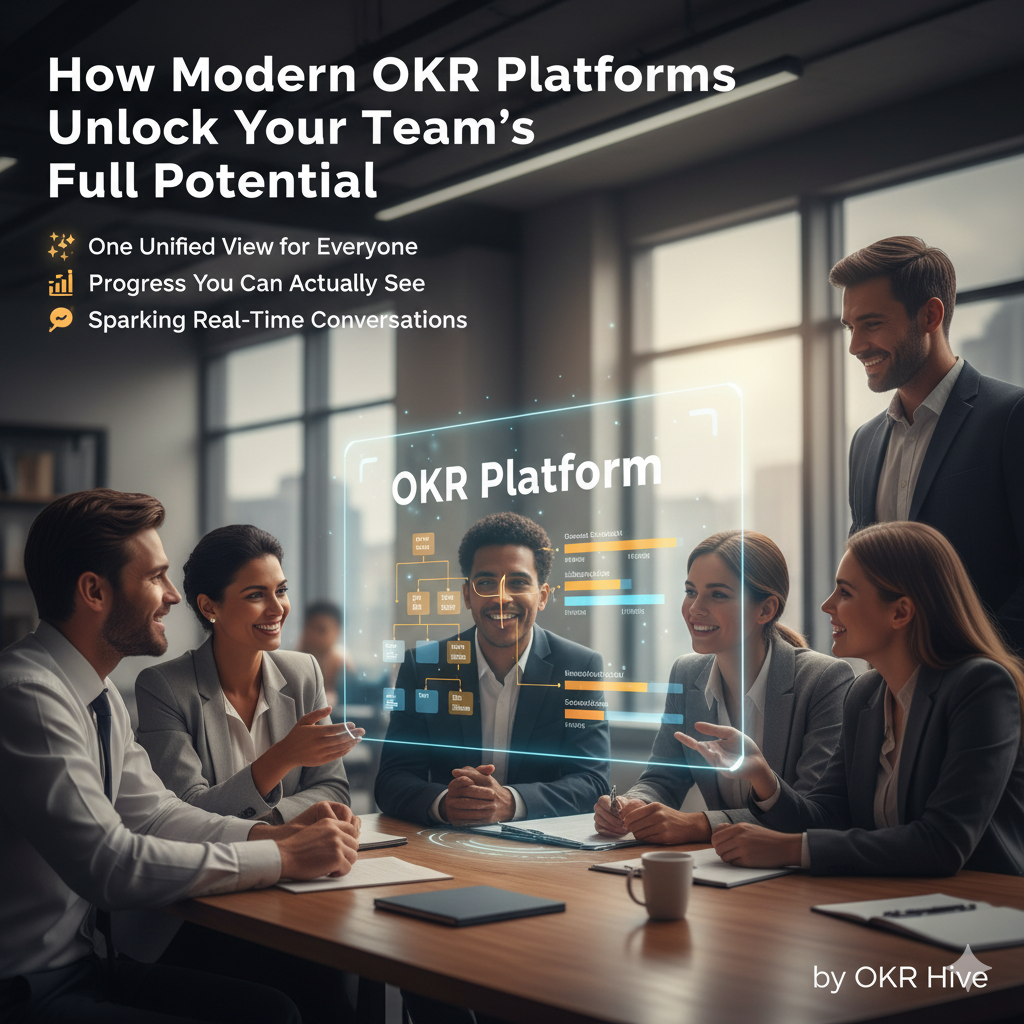
How Modern OKR Platforms Unlock Your Team's Full Potential
One Unified View for Everyone
Every goal and key result lives in a central hub. Everyone operates from the same playbook. This creates powerful alignment across the entire organization.
Progress You Can Actually See
Modern systems use clear visuals like progress bars. Achievements become instantly visible to all. This builds momentum and fosters a culture of recognition.
Linking Tasks to Big-Picture Goals
The best tools connect daily work to strategic outcomes. An employee sees how their specific task advances a company objective. This creates immense clarity and purpose.
Sparking Real-Time Conversations
Feedback happens within the workflow. It replaces formal, dreaded reviews with natural, ongoing dialogue.
This is the real power of modern OKR management software. It moves your team from passive tracking to active achievement.
From Silos to Synergy: Fostering Cross-Team Collaboration
A common organizational challenge is departmental silos. Teams work in isolation, unaware of how their efforts impact others. This fragmentation kills momentum and innovation.
Modern OKR management software shatters these barriers. It creates a transparent environment where everyone can see each other's priorities and progress. Marketing can view Product's key results. Engineering understands Sales' objectives.
This shared visibility is transformative. It naturally sparks collaboration, as teams identify overlapping goals and shared dependencies. The platform itself becomes a catalyst for unified action, moving the entire organization forward in lockstep. This is the power of a true collaborative OKR platform for breaking down walls and achieving shared ambitions.
Key Features to Look For in Your OKR Performance Tracking Tool
Not all platforms are created equal. As you evaluate options, look for these essential features that define top-tier OKR tools for teams.
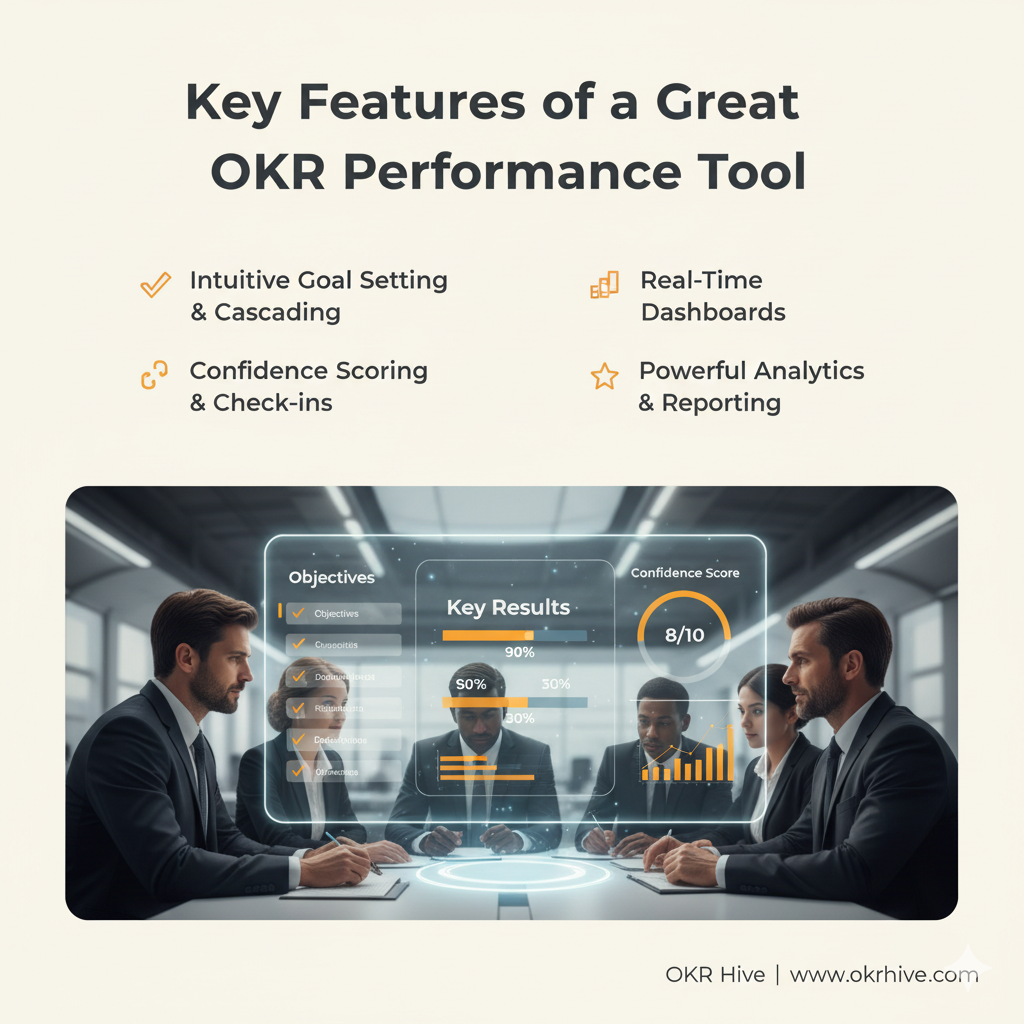
Key Features to Look For in Your OKR Performance Tracking Tool
1. Intuitive Goal Setting and Cascading
The software should make it easy to create and cascade OKRs. You should be able to effortlessly link a team's Objective to a company-wide Objective, creating a clear line of sight for everyone.
2. Real-Time Progress Tracking and Dashboards
Look for live dashboards that give an at-a-glance view of organizational health. Progress should update in real-time as team members log their updates, making status meetings obsolete.
3. Integration Capabilities
Your OKR platform shouldn't be another digital silo. It needs to integrate with the tools your team already uses daily, like Slack, Microsoft Teams, Jira, or Asana. This embeds goal-setting directly into the workflow.
4. Confidence Scoring and Check-Ins
A great feature is the ability to score confidence in achieving a Key Result. Combined with regular check-ins, this provides a qualitative measure of progress beyond just the numbers, sparking crucial conversations early.
5. Comprehensive Reporting and Analytics
You need to understand what’s working. Robust reporting helps you identify teams that are struggling, patterns of success, and the overall ROI of your OKR implementation. This is what separates basic employee performance tracking software from a strategic command center.
Finding the Best OKR Management Software for Modern Workplaces
Your company's size, culture, and industry will influence your choice. The best OKR management software for modern workplaces is the one that fits your unique workflow.
For Startups and Growing Businesses:
Startups need agility and simplicity. Look for OKR software that is easy to set up without extensive training. Affordability is key, but so is scalability. You want a tool that can grow with you, offering more advanced features as your needs evolve.
For Enterprises and Corporate Environments:
Larger organizations need robust security, advanced permission controls, and deep integration with enterprise systems like SAP or Salesforce. The focus for implementing OKR systems in corporate environments is on standardization, governance, and generating organization-wide insights.
For Remote and Hybrid Teams:
For distributed teams, the OKR performance tracking tools for remote teams act as the digital headquarters for alignment. Features like automated weekly check-ins, @mentions, and seamless video call integrations are critical for maintaining connection and clarity across time zones.
The Tangible Benefits of Using OKR Management Software in Enterprises
Moving to a dedicated platform isn't just an operational upgrade; it's a strategic one. The benefits directly impact your bottom line.
Enhanced Focus and Prioritization: By forcing clarity on a few key objectives, these tools help teams say "no" to distractions. This leads to more efficient resource allocation and faster execution.
Dramatically Improved Transparency: When goals and progress are open to all, it builds trust. Employees understand the "why" behind decisions and feel more connected to the company's mission.
Data-Driven Decision Making: Instead of guessing, leaders can make strategic pivots based on real-time data from the organizational goal tracking software. You see what’s stalled and can reallocate support instantly.
Increased Employee Engagement: People want to know their work matters. When they can see their direct impact on company goals, engagement and satisfaction soar. This is the ultimate power of employee goal tracking software for productivity and alignment.
Your 5-Step Checklist for Choosing the Right OKR Performance Tracking Tool for Your Team
Feeling overwhelmed? Use this simple checklist to guide your selection process.

5-Step Checklist for Choosing the Right OKR Performance Tracking Tool for Your Team
Identify Your Key Pains: Are you struggling with alignment, lack of visibility, or low engagement? List your top 3 pains.
Set a Realistic Budget: Understand the cost structure—is it per user, per month? Does it fit your budget as you scale?
Test the User Experience: Take the free trials. Is the interface intuitive? Will your team actually enjoy using it?
Check for Vital Integrations: List the 3-5 tools your team can't live without. Does the OKR software integrate with them?
Evaluate Support and Resources: Do they offer good customer support, training, and a knowledge base to ensure a successful rollout?
The Future is Aligned
The journey to becoming a truly aligned, high-performing organization is not easy. But it is immensely simpler with the right systems in place. Relying on spreadsheets and sporadic meetings is a recipe for staying stuck in the same old cycles.
Investing in a powerful OKR management software is an investment in your company's clarity, agility, and ultimate success. It’s the tool that ensures everyone in your company, from the top down, is rowing in the same direction toward your most ambitious goals.
Frequently Asked Questions (FAQs)
1. How is this different from project management tools?
Tools like Asana manage tasks. OKR management software focuses on outcomes. It answers the "why" behind the work. Project tools track execution, while an OKR platform tracks strategic impact. They work best when integrated.
2. Is this necessary for a small team?
*Yes. Starting with a dedicated system builds strong habits early. It prevents chaos as you grow. This proactive approach is a smart move for any scaling business using an OKR system.*
3. What's the biggest implementation mistake?
Treating it as a "set-and-forget" process. Goals need regular check-ins. The right OKR performance tracking tool makes this easy. Success depends on behavior change, not just the technology itself.
4. Do these tools improve team communication?
Absolutely. They create a shared context for all work. This transparency built into employee performance tracking software reduces assumptions. It naturally sparks better, more focused conversations across departments.
5. How do we drive company-wide adoption?
Leadership must actively use and reference the platform. Choose intuitive goal management software that people find helpful, not burdensome. Start with a pilot team to demonstrate quick wins and build momentum.


