Frustrated by Failed Goals? An AI-Powered OKR Platform Helps
OKR Platform

What if you discovered that nearly 90% of corporate strategies fail to be executed successfully? Research consistently shows that a shocking 60% of organizations' strategic objectives are never linked to their team's daily work.
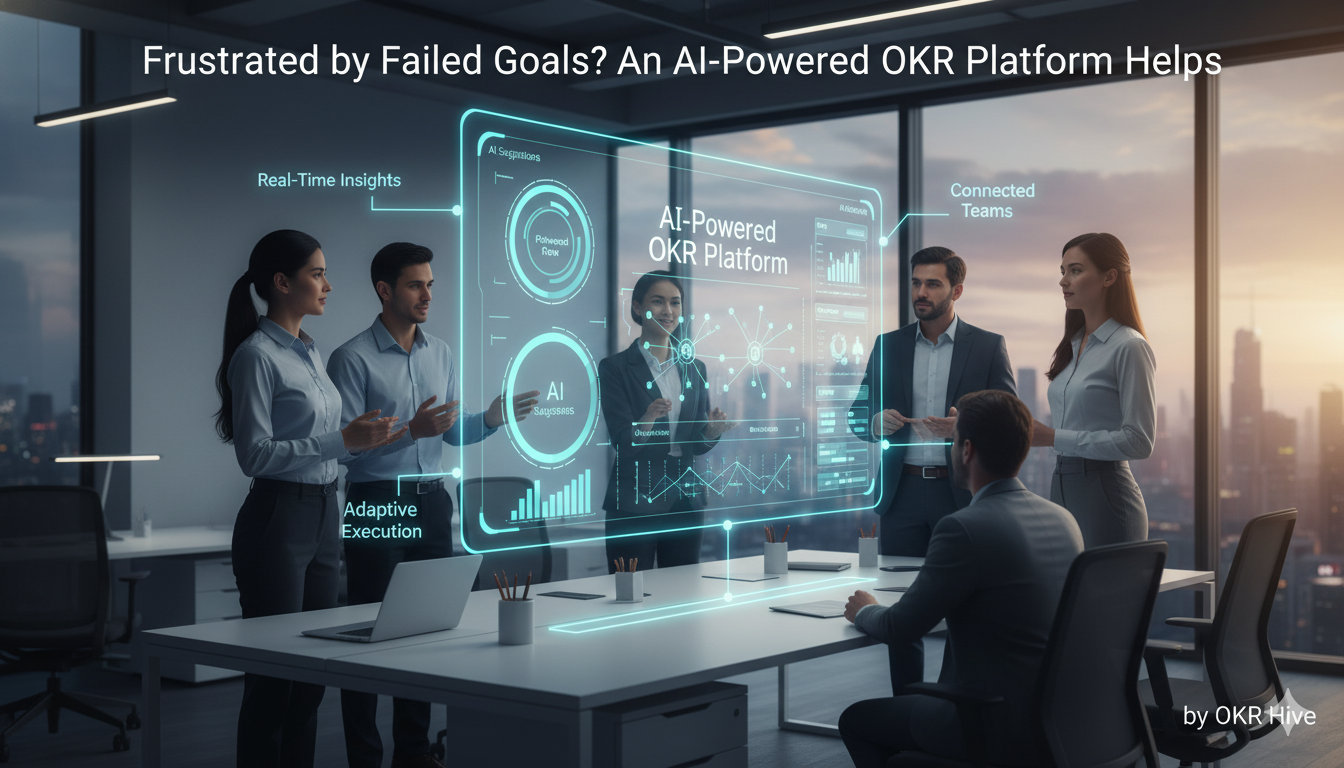
This isn't a failure of ambition, but of connection. The gap between planning and execution is where performance dies. To bridge this chasm, you need a modern OKR Platform. This dynamic OKR tool is designed to replace static, forgotten documents.
Frustrated by Failed Goals? An AI-Powered OKR Platform Helps
The old way—relying on spreadsheets and quarterly emails is fundamentally broken. It creates the illusion of progress without true alignment. It's like trying to win a race with a map that only shows the starting line.
Today, intelligent OKR software acts as your strategic GPS, providing real-time direction. Now, with the power of AI in goal setting, this OKR system represents a revolutionary leap forward. This is not just another post about tracking goals.
It's about how a smart goal management platform is fundamentally transforming execution making it more connected, adaptive, and decisively effective for every single team member.
Why Your Spreadsheet is Holding You Back
Many teams start their OKR journey in a familiar place: Google Sheets or Excel. It feels easy and cost-effective. But this approach has hidden costs that slow you down.
Spreadsheets are static. They don’t talk to your other tools. Updating them is a manual chore. This leads to a lack of visibility. Front-line employees can’t see how their work contributes to the company's mission. Leaders struggle to get a real-time view of progress.
This is where a dedicated OKR tool becomes essential. It moves your goals from a closed file to a living, breathing system. A good OKR system creates a single source of truth for your strategy. It connects daily tasks to quarterly objectives. This builds focus and alignment across the entire organization.
But the evolution doesn't stop there. The next generation of tools is here.
The Game Changer: AI-Powered OKR Software
The real breakthrough in goal management is the arrival of AI. Imagine an OKR platform that doesn’t just store your goals but actively helps you manage them. This is the power of AI in goal setting.
An AI OKR tool acts like an intelligent co-pilot for your strategy. It uses machine learning to analyze your data. It provides insights you might otherwise miss. This transforms the OKR management software from a simple tracking tool into a strategic advisor.
The benefits of AI-powered OKR software are real and measurable. It saves managers hours each week. It helps teams identify risks before they become crises. Most importantly, it makes the entire goal-setting process more intelligent and less burdensome.
Let's break down exactly how this technology is making a difference.
The Game Changer: AI-Powered OKR Software
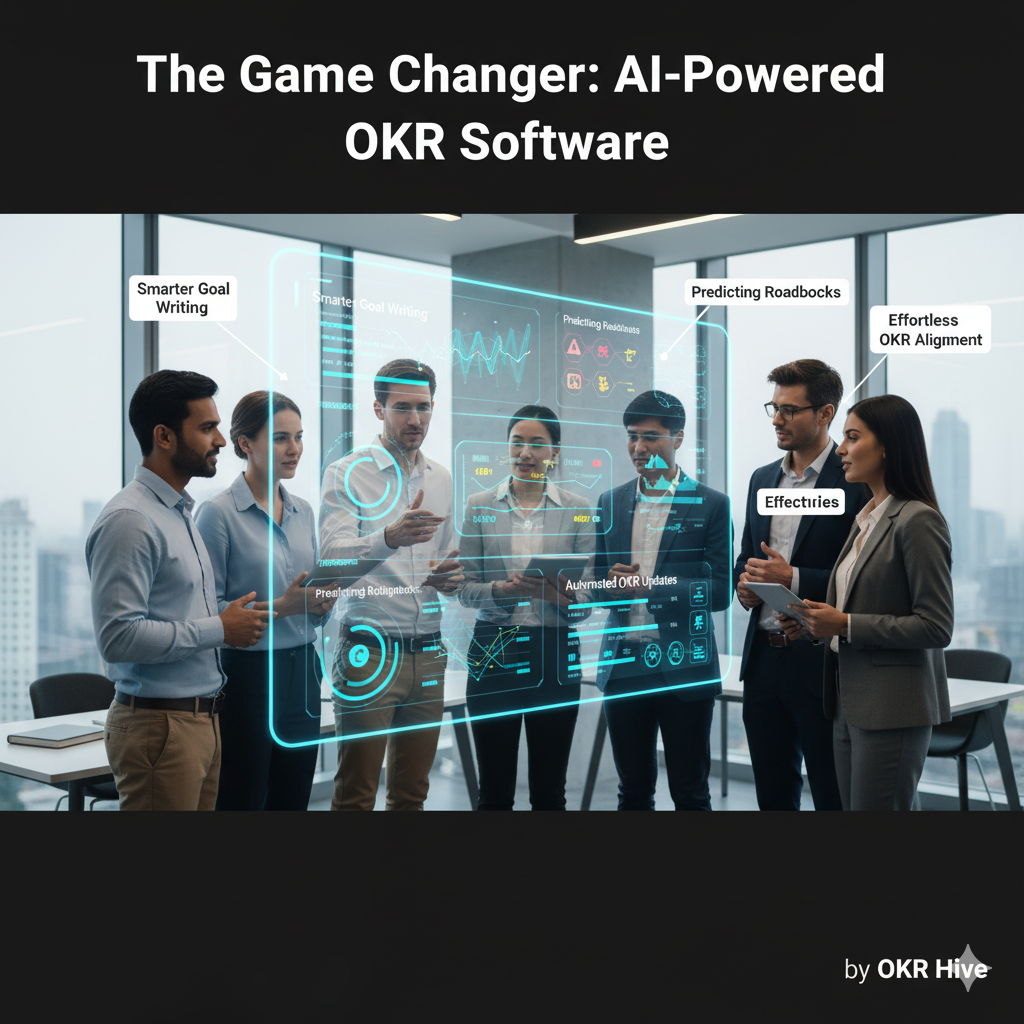
1. Writing Smarter Goals, Automatically
One of the hardest parts of OKRs is writing them well. A goal that is too vague is useless. A Key Result that can’t be measured is just a wish. This is where AI technology in performance tracking shines.
Intelligent platforms can now analyze your draft objectives. They suggest clearer, more impactful language. They can recommend measurable Key Results based on your objective. For example, if your objective is "Create a must-have product for our users," the AI might suggest Key Results like:
"Increase user daily active sessions from 5M to 7M."
"Improve net promoter score (NPS) from +30 to +50."
"Reduce customer churn rate from 15% to 10%."
This AI-based OKR tracking ensures your goals are set up for success from day one.
2. Predicting Roadblocks Before They Happen
A traditional OKR tracking software tells you what has happened. An AI-powered system predicts what could happen. This is a fundamental shift from reactive to proactive management.
By analyzing your progress data, an intelligent OKR platform can forecast outcomes. It might flag a Key Result that is at risk of being missed. It can alert you if progress is slowing down. This gives your team time to adjust. You can re-allocate resources or change tactics before it's too late.
For remote teams, this is especially powerful. Managers don’t have the same visual cues to sense when a project is in trouble. An intelligent OKR platform for remote teams provides that crucial early warning system.
3. Saving Time with Automated OKR Management
Let’s be honest. Updating OKRs can feel like a weekly reporting burden. Team members forget to log in. They struggle to find the right data. This leads to outdated information and frustrated leaders.
OKR automation solves this. The best AI OKR tools can connect directly to your work apps. Think of tools like Jira, Salesforce, or Google Analytics. The platform can automatically pull progress data.
Did your team just close 20 critical bugs? The connected Objectives and Key Results software can update the relevant Key Result automatically.
This removes the manual work. It ensures your goals are always reflecting the latest reality. This automated OKR management for startups is a lifesaver for small teams that need to focus on execution, not admin.
4. Creating Perfect Alignment, Effortlessly
A core principle of OKRs is alignment. Every team should see how their work ladders up to the company's top goals. In a large organization, maintaining this alignment is incredibly difficult.
AI simplifies this. When creating new OKRs, the system can suggest links to parent objectives. It can analyze the goals of other departments. It can even spot potential conflicts or overlaps between teams.
This creates a beautifully connected goal management platform. An individual contributor in marketing can clearly see how their project supports the CEO's top objective for the year. This builds a powerful sense of purpose and collective effort.
What to Look for in a Modern OKR Platform
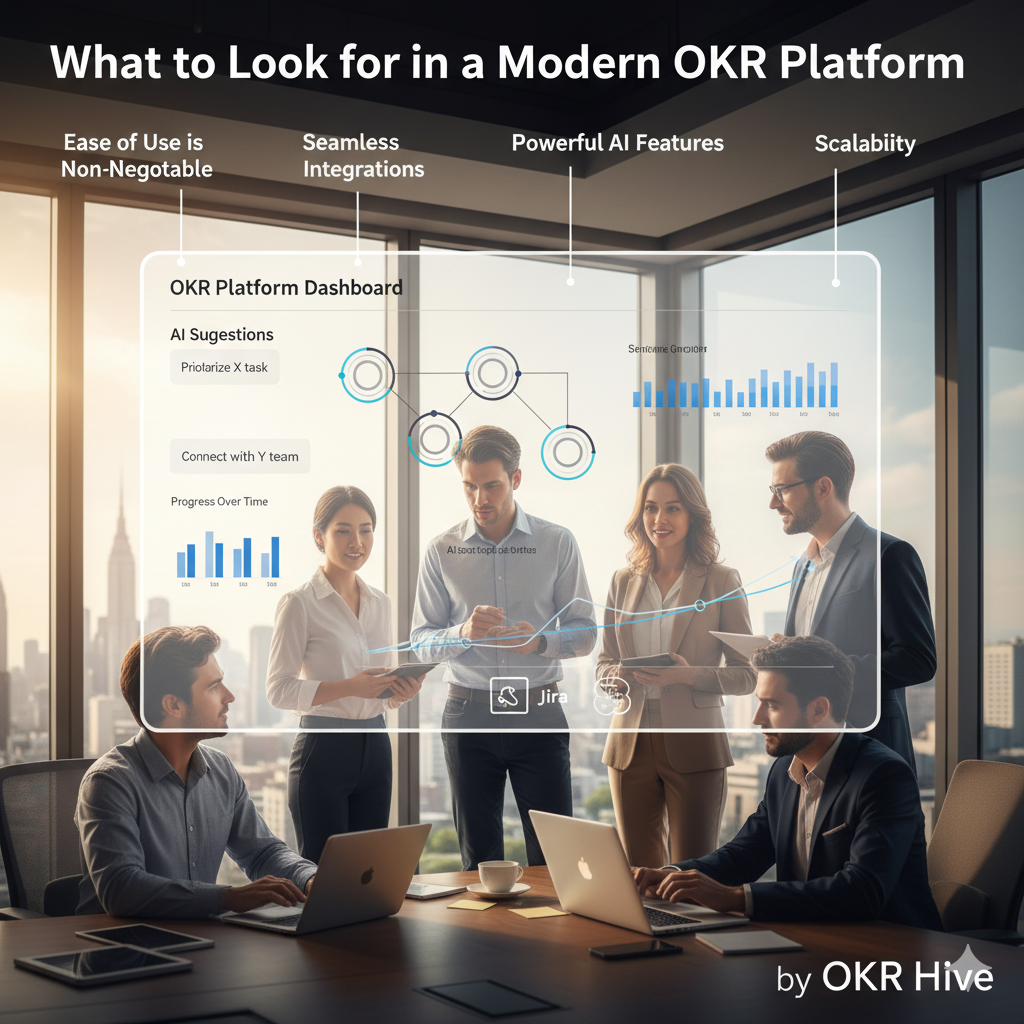
With so many options, how do you choose? The best AI-driven OKR tools for businesses share a few key traits.
What to Look for in a Modern OKR Platform
Ease of Use is Non-Negotiable
If the tool is clunky, your team won’t use it. Look for a clean, intuitive interface. It should feel as easy to use as your favorite consumer app.
Seamless Integrations
Your OKR management software shouldn’t live in a silo. It needs to connect to the tools where your team already works. Check for integrations with project management, communication, and data analytics tools.
Powerful AI Features
Look for platforms that offer concrete AI capabilities. This includes smart goal-writing suggestions, predictive analytics, and automated progress updates. Don't just settle for a basic tracking tool.
Scalability
Your chosen OKR system should grow with you. It needs to work for a 10-person startup and a 10,000-person enterprise. Ask about pricing and feature structures for different company sizes.
The Future is Intelligent: What's Next for OKR Systems
The future of OKR management with artificial intelligence is incredibly bright. We are just seeing the beginning. The future trends in goal setting and OKR systems point to even deeper integration and intelligence.
Soon, your OKR platform might analyze market trends. It could suggest new objectives based on competitive moves. It could use natural language processing to analyze feedback from customer calls. It would then tie this feedback directly to your product development goals.
The line between strategic planning and execution will continue to blur. The goal management platform of tomorrow will be the central nervous system of your company. It will not only track your goals but also help you set the right ones.
Making the Smart Switch
Sticking with manual methods or basic tools is a choice. It’s a choice to accept more busywork. It’s a choice to have less visibility. It’s a choice to be reactive instead of proactive.
Adopting a modern, AI-enhanced OKR Platform is a different choice. It’s a commitment to working smarter. It’s an investment in alignment and focus. It’s a step toward a culture where every team member understands their impact.
The question is no longer if you should use an OKR tool, but which one will empower your team to do its best work.
Frequently Asked Questions (FAQs)
How is this different from other goal-setting methods?
*This approach uses a structured framework within dedicated software. It focuses on measurable outcomes and offers real-time visibility and alignment tools that basic methods like spreadsheets lack.*
Is an OKR platform only for large enterprises?
Not at all. While large companies benefit greatly from the alignment features, startups and small teams gain a huge advantage. An OKR tool helps small teams stay focused on priorities, move faster, and maintain strategic clarity as they grow. Automated OKR management for startups is particularly valuable for resource-strapped teams.
Can AI in an OKR tool really write good goals for me?
AI doesn't replace human strategy and context. Instead, it acts as a powerful assistant. It suggests drafts, recommends measurable metrics, and ensures your goals are well-structured. The final decision and ownership always remain with the team, but the AI saves time and improves the quality of the initial drafts.
How does this improve employee engagement?
It provides clear visibility into how individual work contributes to bigger company goals, creating a strong sense of purpose. Intelligent tracking also removes tedious manual updates, letting people focus on meaningful work.
What is the first step to implementing an OKR platform in my organization?
Start with a pilot. Choose one team that is open to new processes. Get buy-in by explaining the "why"—less busywork, more clarity, and better results. Use the platform's onboarding resources. A successful pilot creates internal champions and makes it easier to roll out the tool across the entire company.


